Responsive Urban Environments
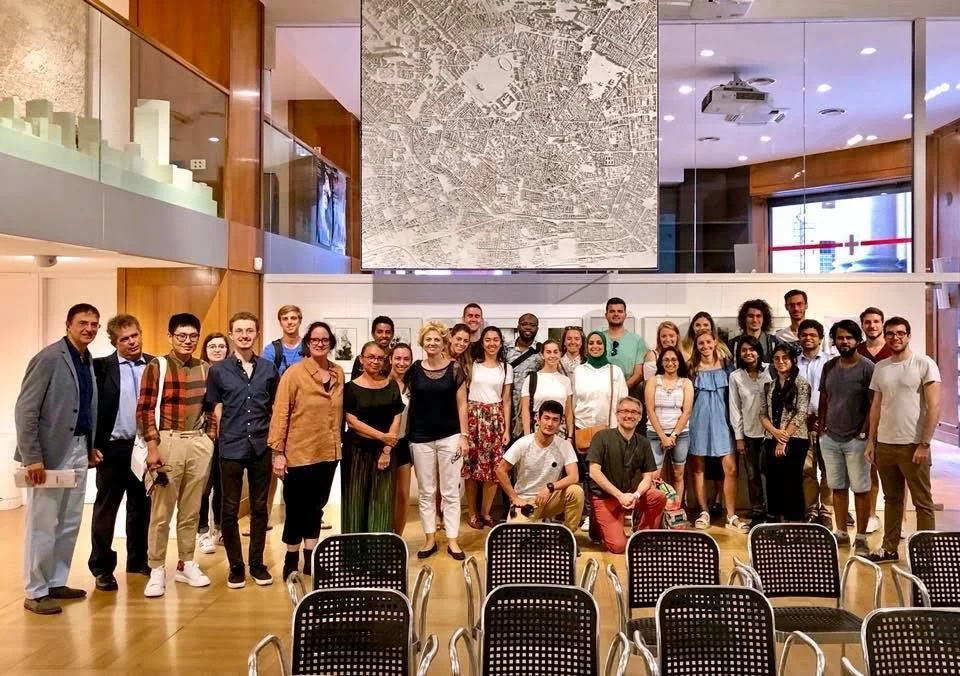
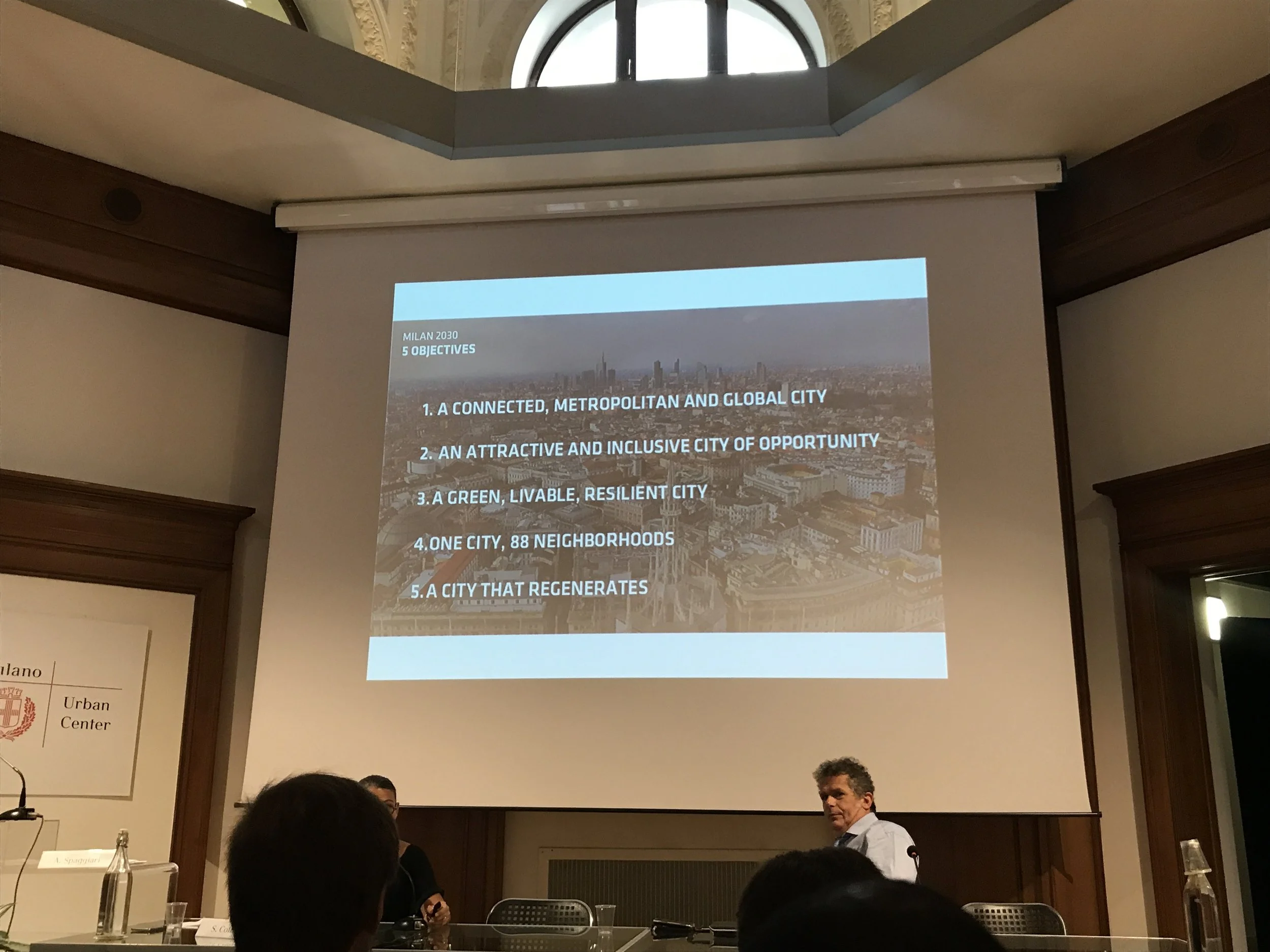
RUE Research group meeting with Milan Municipality to learn about Milan 2030 initiatives, 2018. See article for more.
My research group focused on the existing train station building as an element in the greater masterplan. The research describes a biomimetic, parametric facade system (“Smart Envelope”) that uses organic geometric openings and layered skins—modeled after tree canopies—to optimize daylight, control heat, and create comfortable spatial experiences. We often look roof surfaces, pavement surfaces, and impervious coverage for urban revitalization; can applied facades be designed better to improve our built ecosystems?
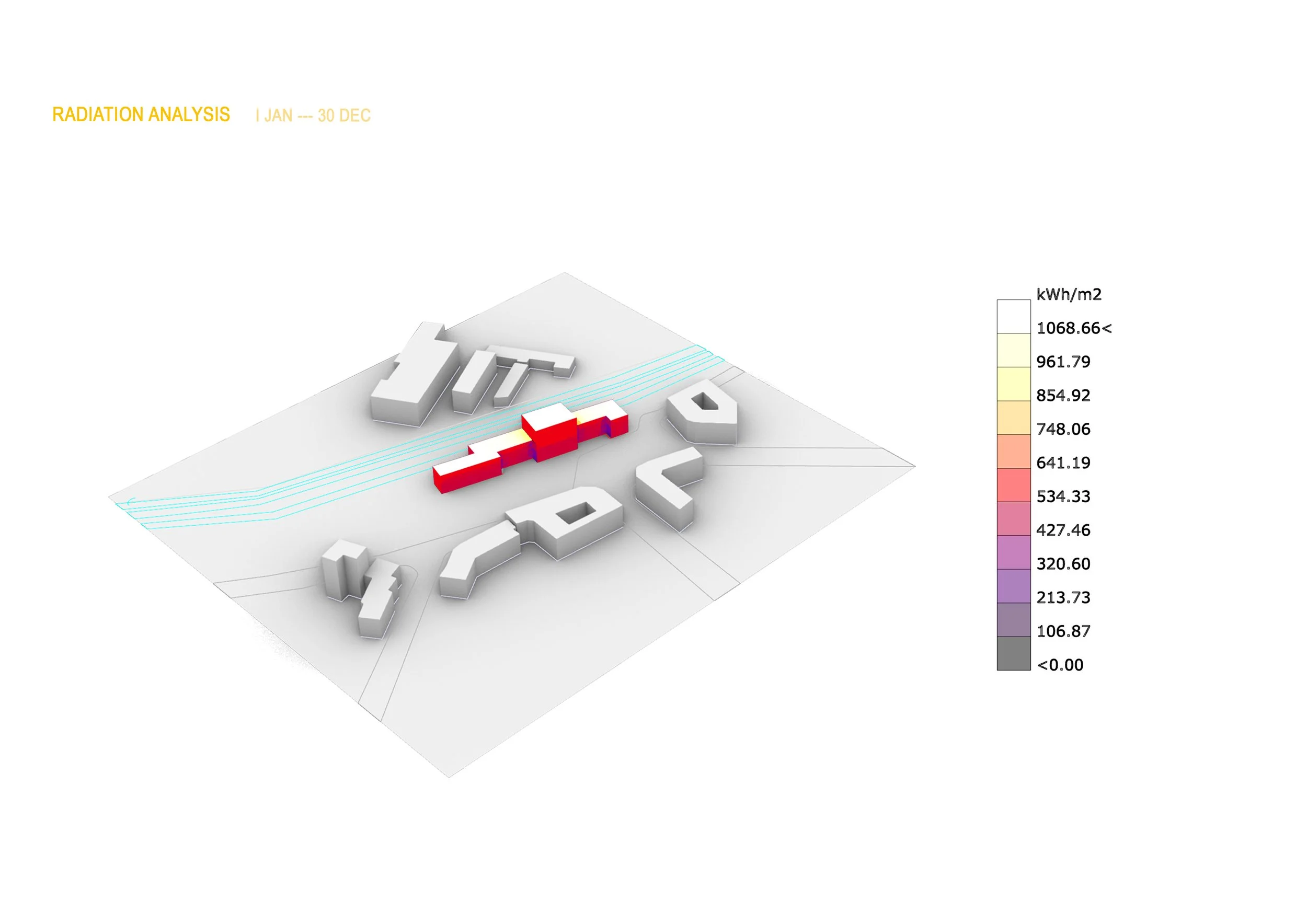
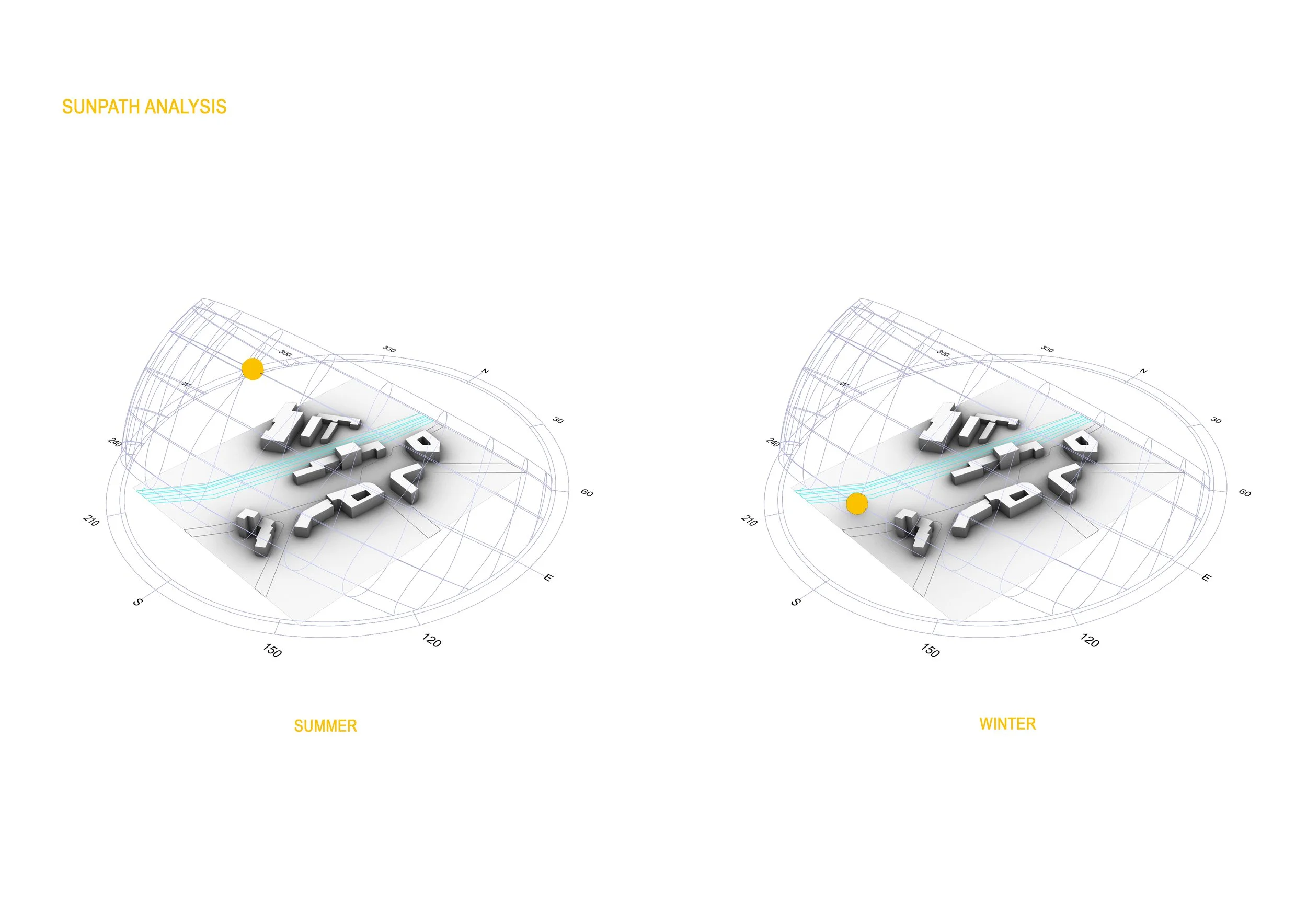
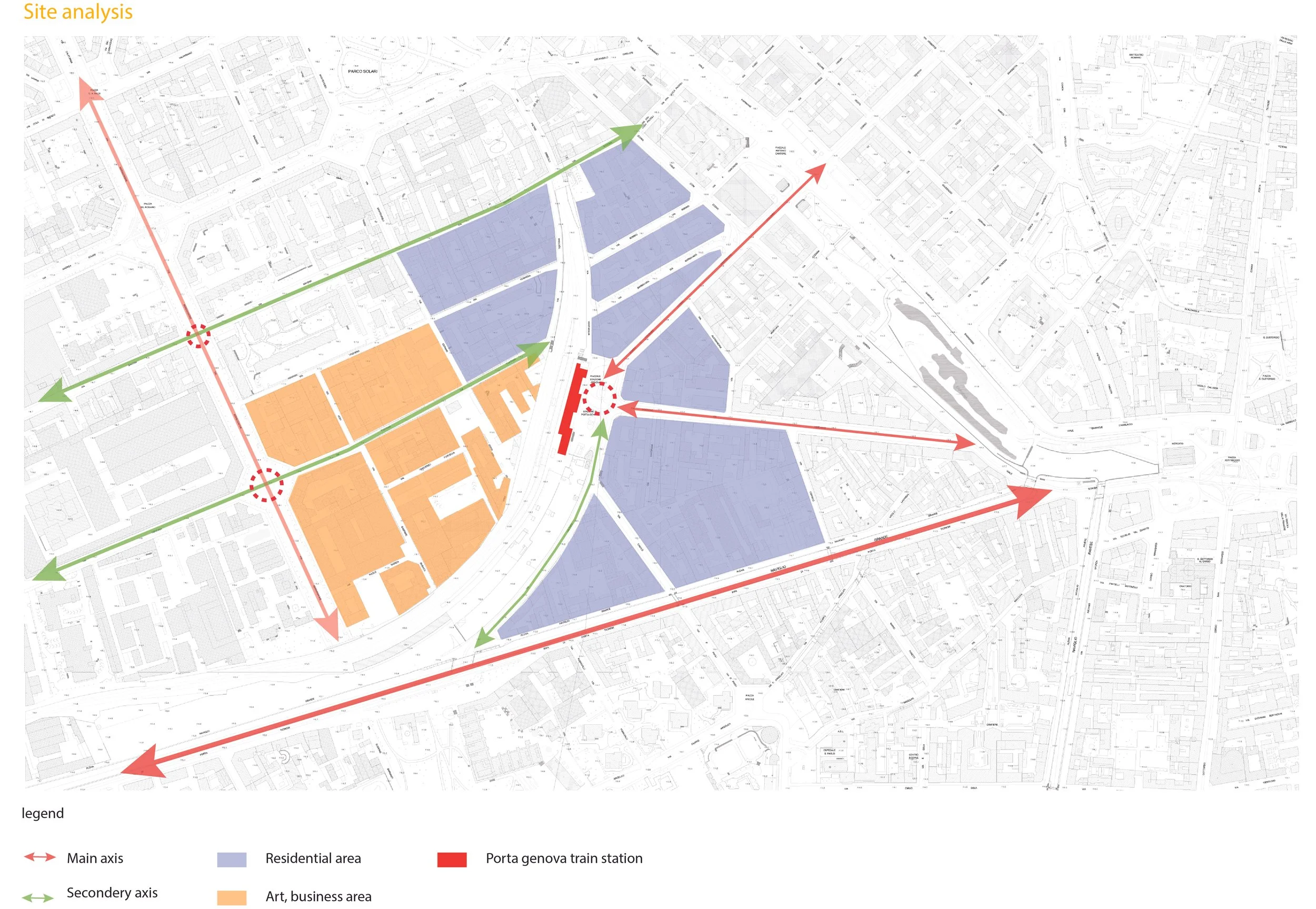
Site analysis and solar studies performed (diagrams above produced by team members collectively) to identify building site as a proposed community hub in addition to a transportation hub. Quantifying the solar exposure of the recessed facades infers the demands of daylighting mitigation or optimization.
Biomimicry as Method
The project draws from tree canopies as environmental filters, where varying levels of permeability regulate solar penetration and produce distinct microclimates beneath. Rather than treating the facade as a static surface, the exoskeleton is developed as a calibrated system of openings that filter light through degrees of density, depth, and layering.
Measured Light Variability → Design Driver
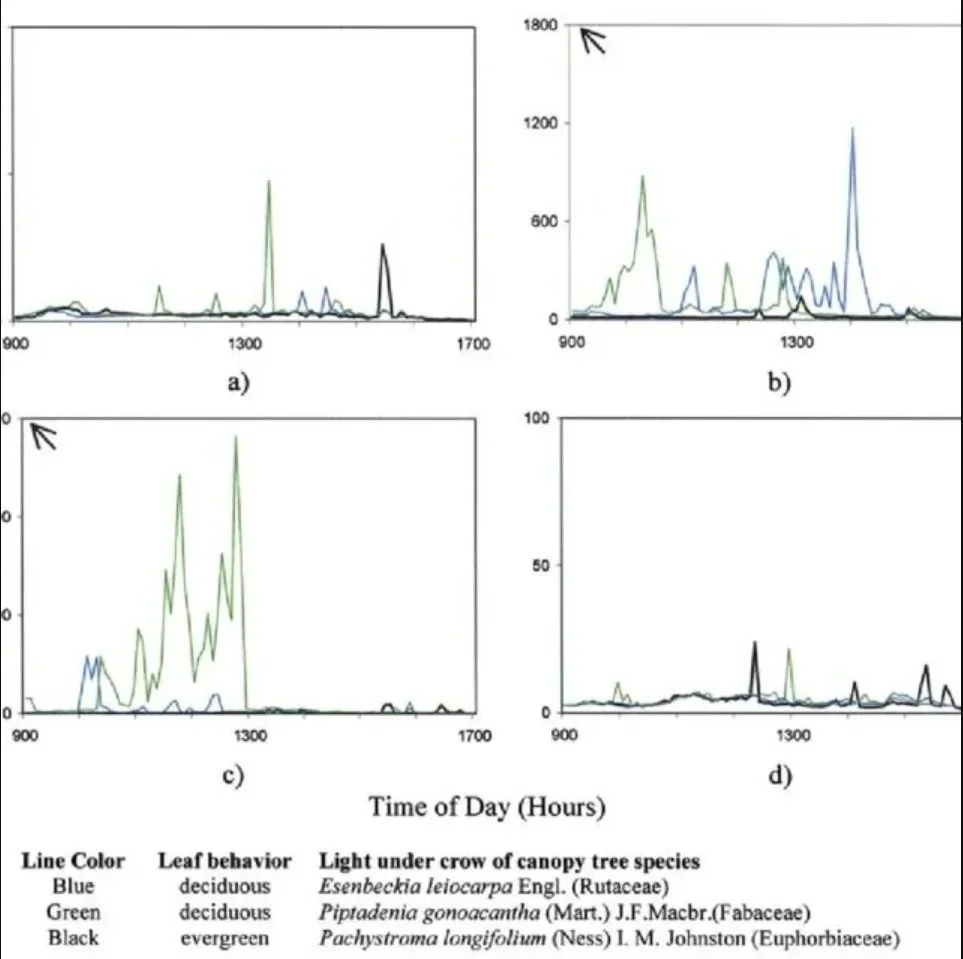
< 10 μmol/m²/s (PPFD)
Light levels beneath dense evergreen canopies
5.8× – 6.6× increase
Light variation under partially leafless deciduous canopies
Up to 23.6× increase
Peak light exposure under fully leafless canopy conditions
These measurements demonstrate that light permeability is not constant—it fluctuates significantly across species, structure, and time. Even within small spatial distances, canopy systems produce a range of light conditions, functioning as environmental filters that shape what can exist beneath them.
From Data to Geometry
This variability informed the design of the exoskeleton as a system of differentiated openings. Using parametric modeling and performance-based simulations, aperture size, distribution, and depth were tested to control daylight penetration and thermal gain.
Irregular, non-repetitive configurations produced more consistent and diffuse daylight conditions than uniform grid systems—establishing variation as a performative tool rather than a formal gesture.
Permeability as Gradient, Not Surface
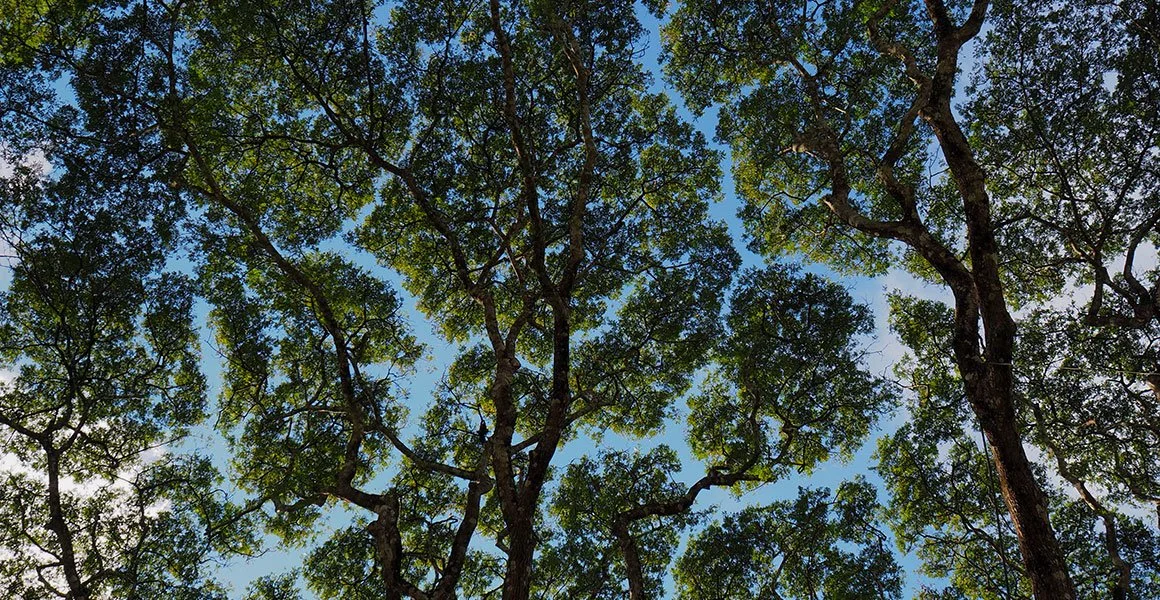
Biomimicry—designing and producing materials, structures, and systems modeled on biological entities and processes—applied to optimize façade performance.
The facade operates through a gradient of openings:
High exposure zones → reduced permeability through smaller, denser apertures
Low exposure zones → increased permeability to direct light deeper into the building
Layered conditions → modulate light without fully obstructing it
This approach mirrors canopy behavior, where light is continuously filtered rather than simply blocked or admitted.
Geometric Translation: Crown Shyness
The phenomenon of crown shyness—where adjacent tree canopies form gaps without touching—was used as a generative model. These interstitial voids were traced and abstracted into a series of irregular geometries, then translated into layered panel systems with varying densities.
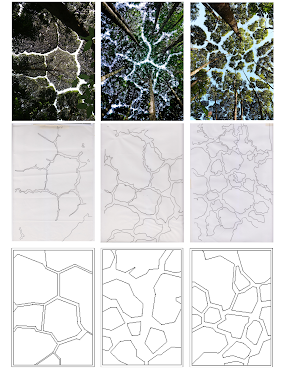
Overlay of crown shyness to inform facade
Prototype studies tested how these configurations affect light diffusion, reinforcing the relationship between geometry and environmental performance.
Envelope as Environmental Interface
The resulting exoskeleton operates as a mediating layer between building and environment:
Regulates interior daylight and solar heat gain
Produces gradients of shade and exposure
Extends environmental performance outward through shading and filtration
Supports the integration of planted systems and improved exterior microclimates
Rather than a static boundary, the facade performs as a responsive filter—one that operates through measurable variation in permeability, analogous to the canopy systems from which it is derived.
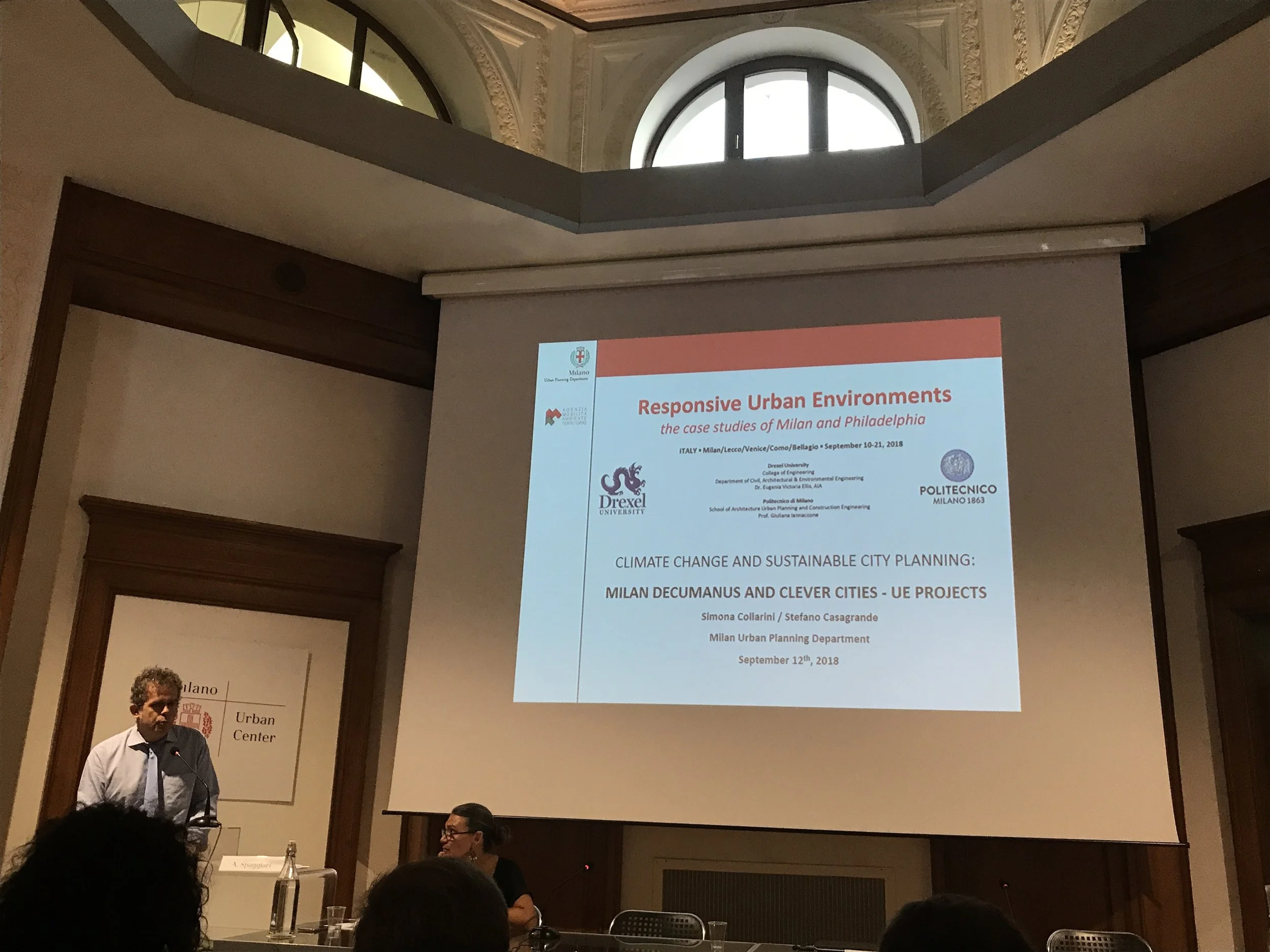
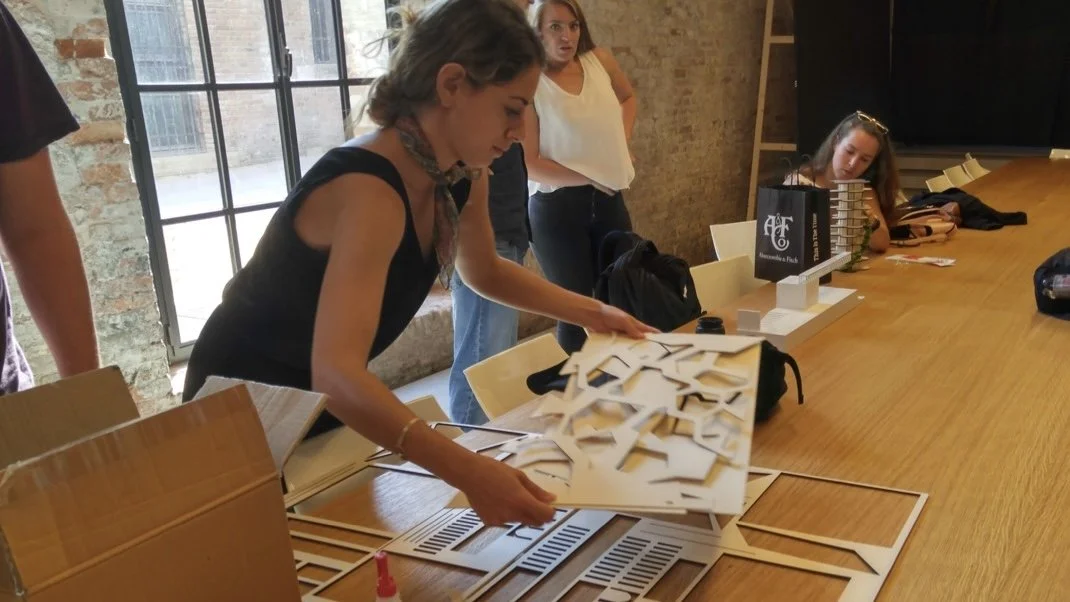
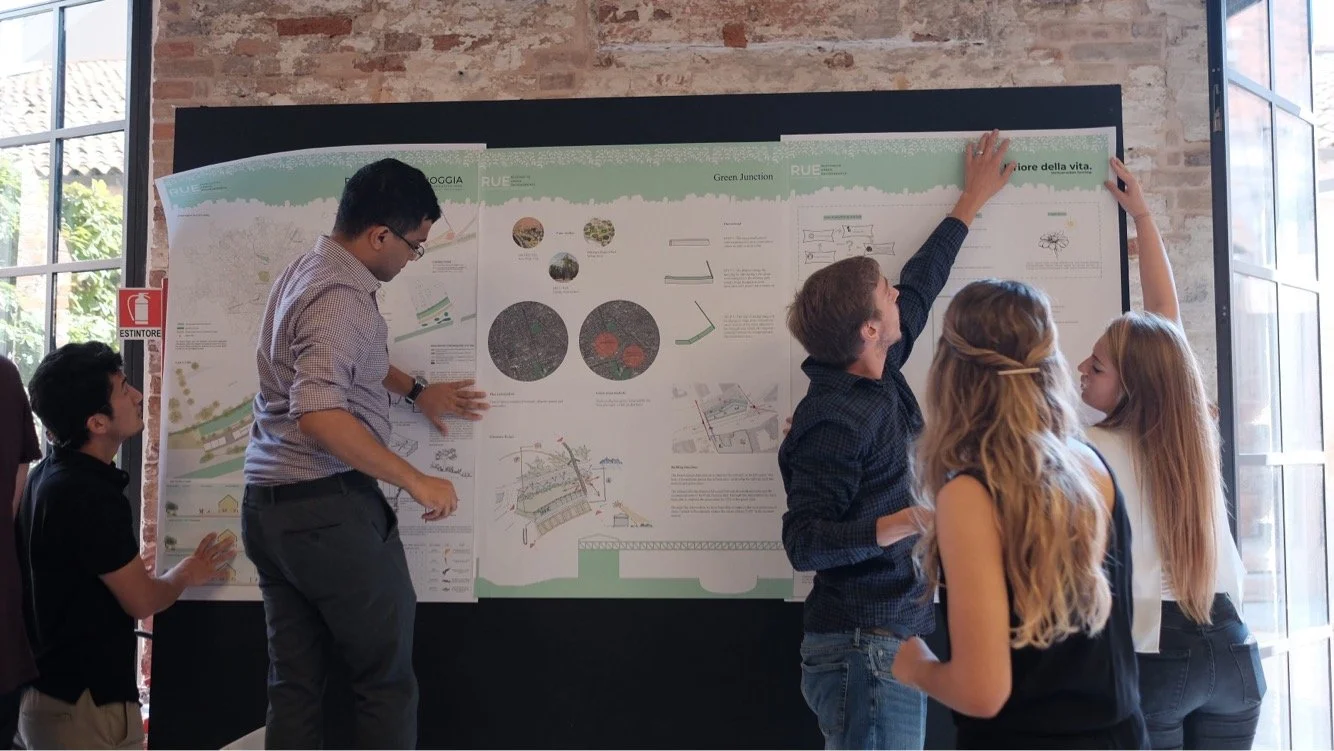
Research was combined with the greater masterplanning findings to present our conceptual proposals at The Venice Biennale 2018.
References
[1] M. López et al., “Active materials for adaptive architectural envelopes based on plant adaptation principles,” Journal of Façade Design and Engineering, IOS Press, 2015. Available: https://content.iospress.com/articles/journal-of-facade-design-and-engineering/fde0026
[2] U.S. Environmental Protection Agency, “Heat island effect,” Sep. 27, 2018. Available: https://www.epa.gov/heat-islands
[3] M. Gibson, “Integrating geometry and light: Daylight solutions through performance-based algorithms,” ARCC Conference Repository, Aug. 2014. Available: https://www.arcc-journal.org/index.php/repository/article/view/323
[4] S. Gandolfi, C. A. Joly, and R. R. Rodrigues, “Permeability–impermeability: Canopy trees as biodiversity filters,” Scientia Agricola, vol. 64, no. 4, pp. 433–438, 2007. doi: 10.1590/S0103-90162007000400015
